
Rod Walker, MS

“I feel fortunate to have the opportunity to provide biostatistical support across a wide range of KPWHRI collaborations that contribute to public health knowledge and improve health care for patients.”
Rod Walker, MS
Principal Collaborative Biostatistician, Kaiser Permanente Washington Health Research Institute
Rod.L.Walker@kp.org
206-287-2895
Biography
Rod Walker, MS, has developed a diverse research portfolio during his 15+ years as a biostatistician at KPWHRI. He has supported research collaborations across a wide range of topic areas including women's health, cancer, aging and geriatrics, physical activity and sedentary behavior, pharmacoepidemiology, opioids, traumatic brain injury, COVID-19, and mental health. Activities during his tenure have included serving as an analyst for the Statistical Coordinating Center for the National Cancer Institute's Breast Cancer Surveillance Consortium; evaluating health system initiatives aimed at reducing risks associated with chronic opioid therapy prescribing; and examining associations between various medication classes and outcomes such as pneumonia, fall-related injury, and dementia. He has also partnered with researchers in the Mental Health Research Network to leverage electronic health record data for predicting risk of suicide attempt and suicide death. These efforts have expanded his knowledge in machine learning, risk prediction, health informatics, and the practical challenges of implementing predictive tools into clinical workflows.
Mr. Walker’s longest-running collaboration is with the Adult Changes in Thought (ACT) study, an ongoing longitudinal cohort study seeking to bolster knowledge of risk factors related to dementia, Alzheimer's disease, and healthy aging. As the ACT study and its related projects have grown, he has contributed to analyses examining how medication use, biomarkers, and other exposures relate to cognitive outcomes in older adults — and has extended this work to investigate associations with neuropathology among participants who provided brain donations. His tenure with ACT has afforded him the opportunity to participate in varied activities such as processing and analyzing physical activity and sedentary behavior data from actigraphy devices worn by study participants; supporting development of prediction models to identify unrecognized dementia by leveraging the unique data available through ACT; and exploring relationships between eye diseases and dementia in collaboration with the Eye ACT ancillary study. Mr. Walker currently serves as co-lead of the ACT Data Science and Informatics Core, helping guide data infrastructure development and coordinate data sharing activities. Continued collaboration with ACT investigators remains a highlight of his research career at KPWHRI, as the study provides rich opportunities to advance public health knowledge relevant to aging populations.
Research interests and experience
-
Biostatistics
Survival and longitudinal data analysis; epidemiology; machine learning; two-phase sampling
-
Aging & Geriatrics
Biostatistics; cognitive health and dementia; neuropathologic correlates of dementia; factors associated with healthy aging
-
Mental Health
Biostatistics; suicide risk prediction; interventions for risk reduction; machine learning and health informatics
-
Medication Use & Patient Safety
Biostatistics; pharmacoepidemiology; medication safety in older adults; opioids and chronic pain
-
Health Informatics
-
Women's Health
Recent publications
Miglioretti DL, Walker R, Weaver DL, Buist DS, Taplin SH, Carney PA, Rosenberg RD, Dignan MB, Zhang ZT, White E. Accuracy of screening mammography varies by week of menstrual cycle. Radiology. 2011 Feb;258(2):372-379. Epub 2010 Dec 3. PubMed
Farhat GN, Walker R, Buist DS, Onega T, Kerlikowske K. Changes in invasive breast cancer and ductal carcinoma in situ rates in relation to the decline in hormone therapy use. J Clin Oncol. 2010 Dec 10;28(35):5140-6. Epub 2010 Nov 8. PubMed
Sonnen JA, Larson EB, Walker RL, Haneuse S, Crane PK, Gray SL, Breitner JC, Montine TJ. Nonsteroidal anti-inflammatory drugs are associated with increased neuritic plaques. Neurology. 2010 Sep 28;75(13):1203-10. Epub 2010 Sep 1. PubMed
Dublin S, Walker RL, Jackson ML, Nelson JC, Weiss NS, Jackson LA. Use of proton pump inhibitors and H2 blockers and risk of pneumonia in older adults: a population-based case-control study. Pharmacoepidemiol Drug Saf. 2010 Aug;19(8):792-802. Epub 2010 Jul 7. PubMed
Kapp JM, Walker R, Haneuse S, Buist DS, Yankaskas BC. Are there racial/ethnic disparities among women younger than 40 undergoing mammography? Breast Cancer Res Treat. 2010 Nov;124(1):213-22. Epub 2010 Mar 4. PubMed

Research

COVID risks not meaningfully greater with estrogen-containing medications
Oral contraceptives, hormone therapy not linked to more severe COVID outcomes.
Research
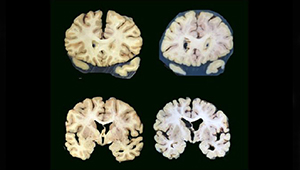
Traumatic brain injury raises risk of brain atrophy
Study suggests pathology of brain cell loss after traumatic head injury is distinct from Alzheimer’s disease.
New findings

Simpler models to identify suicide risk perform similarly to more complex ones
Models that are easier to explain, use could have better uptake in health care settings.