
Social Determinants of Health
Research overview
Social, economic, and behavioral factors can influence the trajectory of one’s health so significantly they have been coined the “social determinants of health” or SDoH. Those factors include:
- Personal characteristics such as race, ethnicity, culture, sex, gender identity, and sexual preference
- Economic resources such as educational attainment, employment, income, wealth, and housing
- Built environment such as transportation systems, access to healthy foods, and walkability
- Adverse experiences such as childhood trauma, interpersonal violence, relationship disruption, or bereavement
Researchers at Kaiser Permanente Washington Health Research Institute (KPWHRI) are committed to understanding how the health care system can best identify, understand, and appropriately respond to these factors to improve the health of our members and our communities.
“Through our evaluation and research, we hope to help empower patients to better manage the social and behavioral factors that influence their health,” said Clarissa Hsu, PhD, KPWHRI associate investigator.
Our institute researchers have long been interested in SDoH. Examples include our work in areas such as tobacco addiction and the integration of treatment for behavioral health issues into primary care. We’ve worked on efforts such as reducing racial disparities in care, opioid overuse, and vaccine hesitancy. Our Center for Community Health and Evaluation has helped to promote and sustain healthy communities; our Center for Accelerating Care Transformation (formerly known as the MacColl Center for Health Care Innovation) has championed the Chronic Care Model and has been committed to helping U.S. primary care practices — including community health centers — integrate community resources into health improvement.
Moving forward, we intend to make targeted improvements in the lives of Kaiser Permanente members, but, as these examples suggest, we also work in communities around the nation for broad impact. Here are just a few examples of KPWHRI’s current work related to SDoH:
- Moving to Health
This project is designed to pinpoint what matters most about individual neighborhoods for their residents’ health. Funded by the National Institute of Diabetes and Digestive and Kidney Diseases, researchers will track individuals and the built environment in their neighborhoods to see how changing communities affects factors such as people’s long-term weight and blood sugar — and whether they develop diabetes.
- LINCC (Learning to Integrate Neighborhoods and Clinic Care)
Researchers on this project, funded by the Patient-Centered Outcomes Research Institute, are testing how adding a community resource specialist role in primary care can help connect people with community resources that support health and wellness.
- Team-based opioid management
The goal of this project is to improve safe prescribing and chronic opioid medication for patients with non-cancer pain in rural primary care clinics across Washington and Idaho. Led by KPWHRI’s Center for Accelerating Care Transformation (ACT Center), the project is helping clinics develop policies, workflows, registries, tool kits, and other resources to better support patients with chronic pain. The work is funded by the Agency for Healthcare Research and Quality.
- Addressing financial hardship
In projects funded by the Robert Wood Johnson Foundation, a team of KPWHRI researchers is learning how health care systems can do a better job of talking transparently with patients about the cost and value of their health care. The goal is to help identify “best practices” for making tools and resources part of regular workflows in clinics. Doing so could ultimately help patients have a better understanding of what their care will cost — information that’s important for helping individuals make informed decisions about treatment based on their own values.
KPWHRI researchers are committed to gaining a holistic understanding of people’s lives — one that can best inform prevention, intervention, and implementation efforts, maximizing the public health impact of our efforts.
KPWHRI researchers have a unique constellation of methodological strengths — including qualitative analysis, implementation science, and experience with evidence reviews, evaluation design and methods, measurement development, big data analysis for community intervention evaluation, pragmatic trials, user-centered design, survey research, and community-based participatory research. These strengths are coupled with substantive expertise (for example, nutrition, physical activity, behavioral health, economic and racial disparities, prevention and health promotion, child health and development, and stigma), and a multi-disciplinary, team-science-based approach that is needed to tackle these “thorny issues.”
We hope to realize the optimal role of the health care system in addressing social, economic, and behavioral needs, and partner with the community to create much needed change.
Recent publications on Social Determinants of Health
Glass JE, Williams EC, Oh H Racial/ethnic discrimination and alcohol use disorder severity among United States adults 2020 Nov;216:108203. doi: 10.1016/j.drugalcdep.2020.108203. Epub 2020-08-10. PubMed
Henderson LM, O'Meara ES, Haas JS, Lee CI, Kerlikowske K, Sprague BL, Alford-Teaster J, Onega T The Role of Social Determinants of Health in Self-Reported Access to Health Care Among Women Undergoing Screening Mammography 2020 Nov;29(11):1437-1446. doi: 10.1089/jwh.2019.8267. Epub 2020-05-05. PubMed
Allen P, Pilar M, Walsh-Bailey C, Hooley C, Mazzucca S, Lewis CC, Mettert KD, Dorsey CN, Purtle J, Kepper MM, Baumann AA, Brownson RC Quantitative measures of health policy implementation determinants and outcomes: a systematic review 2020 Jun 19;15(1):47. doi: 10.1186/s13012-020-01007-w. Epub 2020-06-19. PubMed
Foster CC, Simon TD, Qu P, Holmes P, Chang JK, Ramos JL, Koutlas A, Rivara FP, Melzer SM, Mangione-Smith R. Social determinants of health and emergency and hospital use by children with chronic disease. Hosp Pediatr. 2020;10(6):471-480. doi: 10.1542/hpeds.2019-0248. PubMed
Fulton-Kehoe D, Von Korff M, Mai J, Weir V, Lofy KH, Sabel J, Tauben D, Franklin G Surveillance of Opioid Prescribing as a Public Health Intervention: Washington State Bree Collaborative Opioid Metrics 2020 May;26(3):206-213. doi: 10.1097/PHH.0000000000001067. PubMed
Adami G, Saag KG, Mudano AS, Rahn EJ, Wright NC, Outman RC, Greenspan SL, LaCroix AZ, Nieves JW, Silverman SL, Siris ES, Watts NB, Miller MJ, Ladores S, Curtis JR, Danila MI. Factors associated with the contemplative stage of readiness to initiate osteoporosis treatment. Osteoporos Int. 2020 Feb 4. pii: 10.1007/s00198-020-05312-4. doi: 10.1007/s00198-020-05312-4. [Epub ahead of print]. PubMed
Phelan EA, Rillamas-Sun E, Johnson L, LaMonte MJ, Buchner DM, LaCroix AZ, Anderson GL. Determinants, circumstances and consequences of injurious falls among older women living in the community. Inj Prev. 2020 Jan 15. pii: injuryprev-2019-043499. doi: 10.1136/injuryprev-2019-043499. [Epub ahead of print]. PubMed
Pettigrew SM, Pan WK, Berky A, Harrington J, Bobb JF, Feingold BJ In urban, but not rural, areas of Madre de Dios, Peru, adoption of a Western diet is inversely associated with selenium intake 2019 Oct 15;687:1046-1054. doi: 10.1016/j.scitotenv.2019.05.484. Epub 2019-06-02. PubMed
Researchers in Social Determinants of Health
 Claire Allen, MPHManager, Collaborative Science |
 David E. Arterburn, MD, MPHSenior Investigator |
 Kimberly Arthur, MPHCollaborative Scientist |
 Paula R. Blasi, MPHSenior Collaborative Scientist |
 Jennifer F. Bobb, PhDSenior Biostatistics Investigator |
 Katharine A. Bradley, MD, MPHSenior Investigator |
 Meagan C. Brown, PhD, MPHAssistant Investigator |
 Allen Cheadle, PhDSenior Investigator, KPWHRI; Senior Research Associate, CCHE |
 Andrea J. Cook, PhDSenior Biostatistics Investigator |
 Nicole M. Gatto, PhD, MPHPrincipal Collaborative Scientist |
 Beverly B. Green, MD, MPHSenior Investigator |
 Nora Henrikson, PhD, MPHAssociate Investigator |
 Clarissa Hsu, PhDAssociate Investigator |
 Morgan Justice, PhD, MASenior Collaborative Scientist |
 Gwen Lapham, PhD, MPH, MSWAssociate Investigator |
 Paula Lozano, MD, MPHSenior Investigator; Director, ACT Center |
 Theresa E. Matson, PhD, MPHCollaborative Scientist |
 Linda K. McEvoy, PhDSenior Investigator |
 Jess Mogk, MPHCollaborative Scientist |
 Robert Penfold, PhDSenior Investigator |
 Dori E. Rosenberg, PhD, MPHSenior Investigator |
 Gregory E. Simon, MD, MPHSenior Investigator |
 Kelsey Stefanik-Guizlo, MPHSenior Collaborative Scientist |
Affiliate researcher
Emily Williams, PhD, MPH
University of Washington School of Public Health

Research

Integrating social health into primary care
ACT Center findings provide insights on screening patients for social needs and helping them connect to social services.
News

First 2 scholars selected for program training early-career scientists
LHS E-STAR scholars will conduct research projects to improve health care.
Healthy findings blog

How to make research communications more inclusive
New ACT Center checklist encourages thoughtful language and design choices.
Research

Identifying patients in need of social support services
Kaiser Permanente researchers develop predictive model to help adults with multiple health conditions.
Healthy findings blog

What works to meet complex needs in diabetes care?
An ACT Center partnership is helping a nonprofit engage patients and provide comprehensive care.
News

Training scientists as partners in transforming primary care
Newly funded center will elevate equity and community in learning health system research.
News
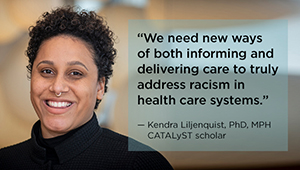
A call for stronger focus on health equity in learning health systems training
Early-career scientists provide steps to a more equitable future.
SONNET study
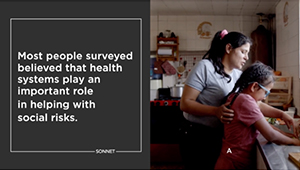
Social risks: Do patients want health systems to help?
New research led by Leah Tuzzio, MPH, looks at patients’ unmet social risks and their desire for assistance.
COVID-19

Greater infection risks linked to COVID-19 disparities
New work by Susan Shortreed, PhD, finds infection risks drive worse outcomes for some racial and ethnic groups.
healthy findings blog

No going back: We must rise now to end structural racism
Dr. Rita Mangione-Smith shares 6 changes our research institute can make to address racism as a public health crisis.
Delta Center Launch
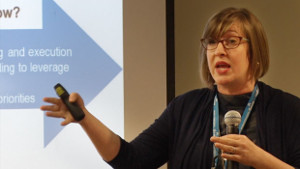
MacColl Center helps launch Delta Center for a Thriving Safety Net
New collaborative with John Snow Inc. and Center for Care Innovations aims to spur innovation in value-based payment and care.
Video
Moving to Health
Where you live can affect your health, and a $2.67-million NIDDK-funded UW/KPWHRI project explores how.
(Vimeo, 2:10)
Healthy Findings Blog
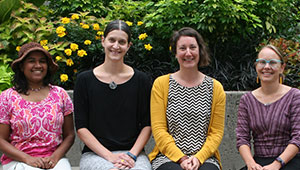
Can kids be screened routinely for adverse childhood experiences?
Lisa Schafer leads CCHE’s evaluation of the Center for Youth Wellness’ National Pediatric Practice Community on ACEs Screening.
Social Determinants?

What’s wrong with the term ‘social determinants of health’?
Let’s change our language to allow room for resilience, hope, and effective intervention, writes Dr. Gregory Simon.